5 Mart 2012 Pazartesi

Another Singularity by Antony Gormley

ANOTHER SINGULARITY is a body-zone constructed from a matrix of packing polyhedra that conforms to the geometry of the bubble matrix. The skin of this zone is connected to the inner skin of the building by 682 radiating trajectories that complete the tetrahedral node pattern of the rest of the matrix.The idea is to treat the body as an adimensional space, rather than as an object, and to connect it to architecture and internalise the foundational conditions of space/time 13.7 billion years ago. The gallery space is activated by high tension bungee lines which catch the light from the upper windows, creating a field which contradicts and modifies the orthogonal geometry of architecture and our passage within it.In mediating between a conceptual, abstract body-zone and the body of the architecture the viewer becomes a figure in an immersive high-energy field. The work is an implicate order in which every trajectory has a dynamic and interdependent effect on the total matrix.The proposition of the work is that art can be an instrument with which we re-locate ourselves within a space/time matrix and perhaps begin to negotiate space in a way that is not to do simply with locomotion.

Firmament by Antony Gormley

FIRMAMENT, the ancient name for the night sky, brings to mind an assembled matrix of volumes that map a celestial constellation, while also implying the form of a body lost within it. Literally a drawing in space, the non regular polygonal structure of FIRMAMENT looms over the viewer, giving a sense of both claustrophobia and landscape, testing our experience of space.


4 Mart 2012 Pazar

THE NEXT REVOLUTION ? by Lebbeus Woods

In a recent panel discussion with Hernan Diaz Alonso, we exchanged differing opinions about digital computers but agreed on one crucial point: debates about digital computers versus hand drawings are over. The digital computer is not only an established part of architectural practice, but is central to it. This is because it can do things that hand drawing cannot do and in particular facilitate a type of construction ever more prevalent in the building industry. Then our discussion turned in another direction: the future development of computing machines in architecture.

My contention was and remains that there will be a resurgence of analogue computers, with which Hernan did not disagree. The digital revolution is over. While refinements in software and hardware will continue, digital computers have won their central role and will not lose it, short of a collapse of the present civilization. However, they have their limitations and these are already becoming clear. The breaking of the world down into infinitely manipulable bits and bytes leaves a vast empty space in human thought that cannot be filled, or should I say ‘represented’ in that way. Without representation in some form thought cannot exist. This is where analogue representation comes into the story.

First of all, what is an analogue? An analogue is something that shares certain qualities with a subject or an object under our consideration but not others. In other words, it is not a literal, ‘virtual’ representation of the subject or object, but rather a symbolic one, Analogue thinking is thinking in symbols and produces representations or (a better term) descriptions. The advantage this analogous kind of thinking has over literal descriptions is, in the first place, that it can describe things that have not been known or described before. Types of space, systems of order, even emotions. While this same possibility is often claimed for virtual representations or descriptions, I contend that every virtual invention has a history of models on which it is based. Let me give a small example.

I once asked my students, as an overnight sketch problem, to make a drawing of a being from another, very different world—an alien. The next day, the drawings they showed me looked like fusions of human beings and snakes, beetles, various plants, and so on. The point is, my students—very bright and creative—could only create hybrids of living things they already knew. Part of the reason for this, I concluded, was because they made representational, ‘virtual’ drawings. If they had given me a mathematical equation, or a matrix of different colors, they would certainly have been able to make aliens we had never seen before. At the same time their description would have had to be translated—interpreted—to have resulted in a conventional representation or portrait of the alien. Then again, why would we need to render them conventionally?

The answer to this question is: we are used to it. The rendering of what a thing looks like is the way we are accustomed to getting descriptions. The digital computer is so popular and accepted because it specializes in exactly this kind of description. However, it can describe what we don’t already know only in very limited ways, usually by montage or collage, that is, by combining things that we do know into descriptions of something we don’t. This is a serious limitation when we are exploring the unknown. In that situation the analogue computer is a far superior tool.

The most powerful analogue computer known is the human brain. Consisting of millions of neural nets—electrical circuits—it can compute numerous complex operations simultaneously—not only walking and chewing gum at the same time, but many other involuntary and voluntary body functions while working through subtle emotions and complicated philosophical questions, all at the same time. Minute after minute, day after day, throughout a lifetime. Some two billion neurons comprise the circuits in a nearly infinite number of continually changing interactions. The statistics go on, but the point remains that the analogue computer works by abstract descriptions, not literal ones.

Now, if the world inhabited by human beings could be controlled only by electrical impulses that could command bricks to be moved, concrete to be poured, steel to be made; or crops to be planted and harvested; or laws to be enacted and enforced, then the story could begin and end with the human brain. Perhaps that will be the future direction of human technological evolution on the planet. But until such a time, it will remain for us to interpolate between the analogical and the digital, between abstract descriptions and the literal representations of things. To a large extent, the task of this kind of interpolation makes up the history of science and art.

The ‘education’ of the human brain is an ongoing, increasingly important task. But so is the invention and development of the technological prostheses we require to interpolate, to bridge the gaps between abstractions and representations. With digital computers advancing so rapidly, we have neglected the potentials of their analogue cousins. such as those that would enable:

—slum-dwellers to analyze their own complex communities, the better to organize politically and economically;

—urban planners to understand the continually-changing layerings of human activities within a dense city center;

—architects to incorporate available recyclable materials in the design stages of their projects.

—?

A coming generation of analogue computers will differ from digital computers in many ways, but the most crucial is that they will each be designed and built for a particular situation and task, rather than as a ‘generalized’ machine usable for all situations. If we think about it, this follows the example of our brains, which would not serve a cheetah very well. Indeed, my brain would not serve you very well, as it is continually being constructed by my unique life experiences. But this takes us in a direction this post cannot go. It must serve here to say that the analogical might well be and perhaps should be at the center of the next great technological revolution.

LW

29 Şubat 2012 Çarşamba

Mehmet Gozetlik Art Director / Designer | Seminer : Bilgi Üniversitesi Basic Design Studio. Friday / Cuma 13:30 pm

Mehmet Gozetlik is Executive Art Director and Co-Founder of Antrepo, a design collective, he is also a part-time typography Instructor at the Isik University. He is living in Istanbul. After having graduated Hacettepe University Graphic Design Dpt., he got his MFA degree from Bilgi University. He has been building his career on creating works for a great number of various brands and purposes.
His works is featured in many international publications, books, magazines, online galleries and web blogs,
some of them joined the Hacettepe Art Museum Permanent Collection, also two of Mehmet's projects was exhibited in the “Reason design Emotion" sub-theme of the Beijing International Design Triennial with many international designers including Naoto Fukasawa, Zaha Hadid, Ross Lovegrove, Marc Newson, Norman Foster, Philippe Starck etc. Most of Mehmet Gozetlik's limited edition artworks have gained attention by art lovers all over the world and have been sold in 47 countries. His last article is published in the Washington Post and it is referred and shared by famous designer or design authority like Erik Spiekermann, Scott Thomas, Antonio Carusone etc.
He also creates product designs, pop-art posters, UI icons, fonts etc. for a Better Tomorrow!
His products are available exclusively at the amazon, urban outfitters and many international design stores.
Some of the awards he won: Young Creative Entrepreneur Award, Typography Achievement Award,
Sappi International Print Award etc.

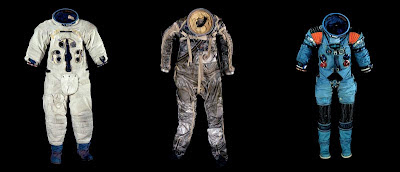
SPACESUIT: AN INTERVIEW WITH NICHOLAS DE MONCHAUX

[Image: From Spacesuit: Fashioning Apollo by Nicholas de Monchaux].
Nicholas de Monchaux is an architect, historian, and educator based in Berkeley, California. His work spans a huge range of topics and scales, as his new and utterly fascinating book,Spacesuit: Fashioning Apollo, makes clear.From the fashionable worlds of Christian Dior and Playtex to the military-industrial complex working overtime on efforts to create a protective suit for U.S. exploration of the moon, and from early computerized analyses of urban management to an "android" history of the French court, all by way of long chapters on the experimental high-flyers and military theorists who collaborated to push human beings further and further above the weather—and eventually off the planet itself—de Monchaux's book shows the often shocking juxtapositions that give such rich texture and detail to the invention of the spacesuit: pressurized clothing for human survival in space.
[Image: From Spacesuit: Fashioning Apollo by Nicholas de Monchaux].
Bridging the line between clothing and architecture, the spacesuit is a portable environment: a continuation of habitable space, safe for human beings, capable of radical detachment from the Earth. That a "soft" and pliable suit designed by Playtex—manufacturer of women's underwear—would beat the "hard," armor-like suit design of military contractors is the surprising core story of de Monchaux's research.
[Image: From Spacesuit: Fashioning Apollo by Nicholas de Monchaux].


27 Şubat 2012 Pazartesi

Instagram Fenomeni

Instagram Fenomeni : Geçtiğimiz yıl flickr'da en çok yükleme(upload) iphone ve nikon d90 dijital kameralardan oldu yılın sonunda iphone birinci sıraya yerleşmişti bile, bu yıl yine birinci sırada açık ara henüz uygulamanın kullanılması 1 yıl bile olmadan instagram 150 milyon yükleme ile zirvede. instagram bizi taşınabilir kameranın kodak tarafından icat edildiği 100 sene öncesine götürüyor ve hatta farklı filtreleri ile; tilt-shift lens, pin-hole, lomography, polaroid gibi instagram kullanıcılarının pek çoğunun fotoğrafçılıkta gerçek anlamını ve uygulamalarını bile bilmedikleri bir bir dünya sunuyor, fotoğrafın özgürleştiğini söylemek mümkün mü ? Evet bence mümkün. Öte yandan fotoğrafla çok içli dışlı olanlarda yarattığı bir sancı da olduğuna inanıyorum, bu ikilemi mimari fotoğraf konusunda bir sunum yapmak üzereyken yaşadım , yaşıyorum . Kodak'ın kurucusu George Eastman No. 1 Kodak kamerayı tanıtırken kullandığı ''Siz butona basın, gerisini biz hallederiz'' meşhur sloganı ile kolay, eğlenceli, herhangi bir ekipman ve ön bilgi gerektirmeyen devrimsel bir buluşu tasvir ediyordu. Bugün instagram ın web sitesinde de şu kelimeleri görüyoruz hızlı, güzel, eğlenceli, kolay instagramda ek olarak ''paylaşmak'' vurgusu var ! geçtiğimiz hafta yine instagramla ilgili bir haberde şöyle diyordu ''instagramla çekilen fotoğraflar çok güzel ve popüler ama yine de fotoğrafçıların çektiği instagram fotoğrafları daha güzel'' diyor ve ben buna hiç ama hiç inanmıyorum instagramın dünyasında tıpkı Eastman'ın dolaylı olarak vurguladığı gibi artık herkes eşit ve aynı derecede özgür. Ara Güler her ne kadar dijital dünyaya mesafeli olsa da bunun ''iyi birşey olduğunu ve dijital fotoğraf sayesinde insanların daha fazla etrafa baktığını söyler '' , benim bunların hepsinin ötesinde daha derinden düşündüğüm mesele ise bugün fotoğrafın gerçeklikle kurduğu ilişkidedir instagram bu ilişkiyi derinden etkilemektedir